

You’ve priced a compactor, mapped the floor space it would free up, and run the numbers on fewer pickups. Then someone in EHS asks the question that stalls the purchase: will our TSDF even take compacted drums?
It’s a fair worry. Nobody wants to buy equipment and then see the first load come back as a rejected shipment. So, will a TSDF accept compacted drums? Usually yes, but it depends on your waste profile and the facility’s acceptance criteria, not on the machine.
Will a TSDF Accept Compacted Drums? Usually Yes, If the Waste Profile Says So
Treatment, storage and disposal facilities (TSDFs) handle compacted drums routinely. What decides acceptance is the approved waste profile for that stream and the facility’s Waste Acceptance Criteria (WAC).
If the drum at the dock matches the profile and meets the WAC, compaction is rarely the problem. If it doesn’t match, compaction can make the mismatch worse.
Start by separating two very different situations:
- Crushed empty drums, where the flattened drum itself is the waste.
- Drums filled with compacted waste, where in-drum compaction packs more rags, PPE or debris into each container.
Each raises different questions. Use this article as a pre-purchase checklist: confirm acceptance with your TSDF and hauler first, then choose the drum crusher or compactor that fits the streams they’ve approved.
Scenario 1: Crushed Empty Drums
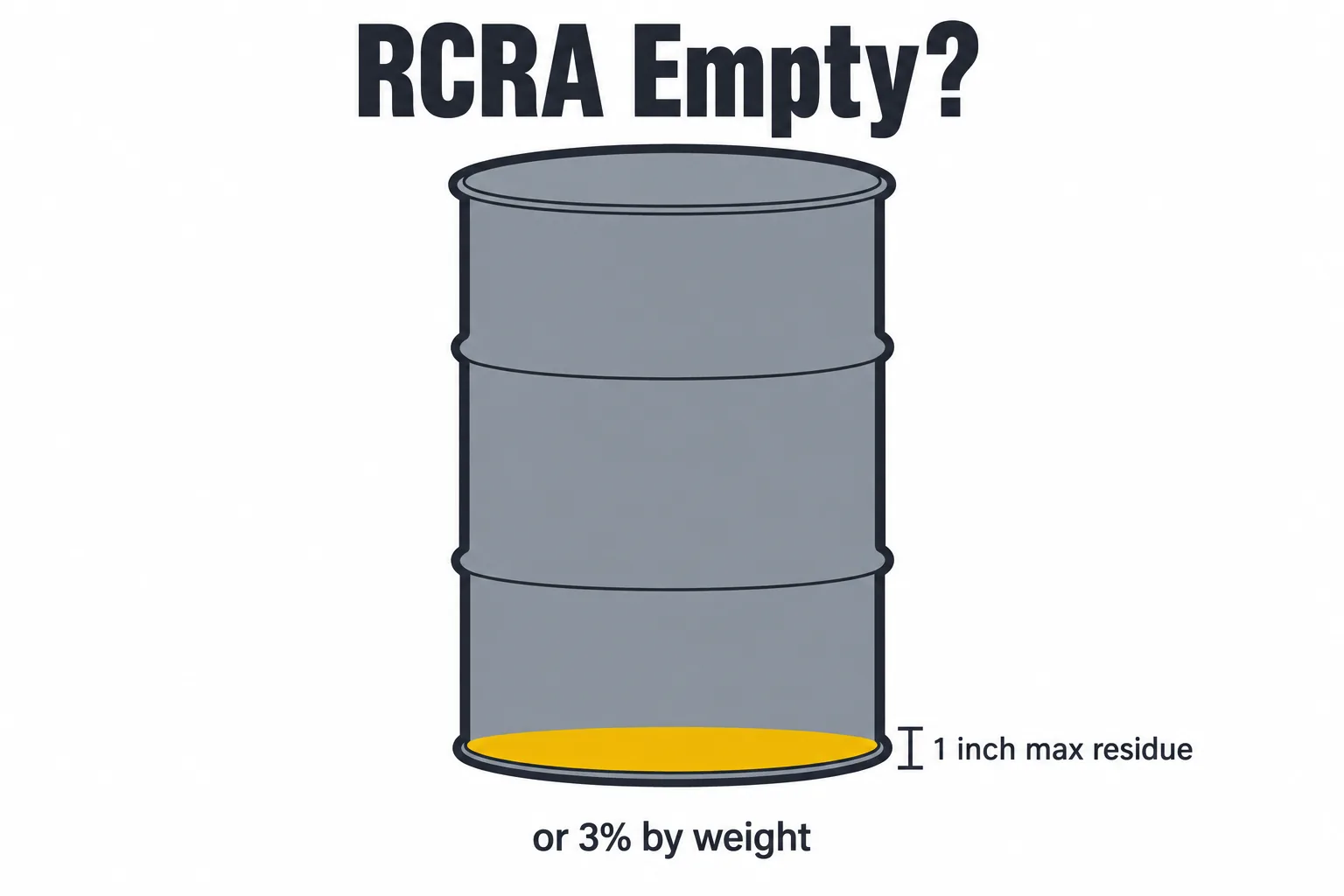
Where a crushed drum goes depends on whether it was “RCRA empty” before you crushed it.
Under EPA’s container residue rule at 40 CFR 261.7, a drum that held non-acute hazardous waste is empty when all wastes have been removed using common practices and no more than 1 inch (2.5 centimeters) of residue remains, or no more than 3 percent by weight remains for containers of 119 gallons or less.
Containers that held acutely hazardous waste face stricter conditions in the same rule, so check it carefully for those streams.
That threshold sends crushed drums down one of two paths:
| Drum condition | Where it goes | Packaging |
|---|---|---|
| RCRA empty (1 inch or less of residue, or 3% or less by weight for containers of 119 gallons or less) | Scrap metal recycler or drum reconditioner, if they accept it. Ask about their residue and rinsing expectations first. | Per the recycler’s requirements |
| Not RCRA empty (hazardous residue above the threshold) | Permitted TSDF. Profile, manifest and ship as hazardous waste. | Typically an overpack, roll-off or cubic yard box meeting DOT requirements. Your TSDF will specify. |
Crushed drums with residue rarely ship loose. They typically travel inside an overpack, roll-off or cubic yard box that meets DOT packaging requirements, and your TSDF will specify which outer packaging it wants.
The crusher matters here too. Look for an enclosed crushing chamber, a way to collect drips and residue, and a design built for drums that may still hold chemical residue. Our overview of safe steel drum crushing covers those features in more detail.
Scenario 2: Will a TSDF Accept Compacted Drums Filled With Waste?
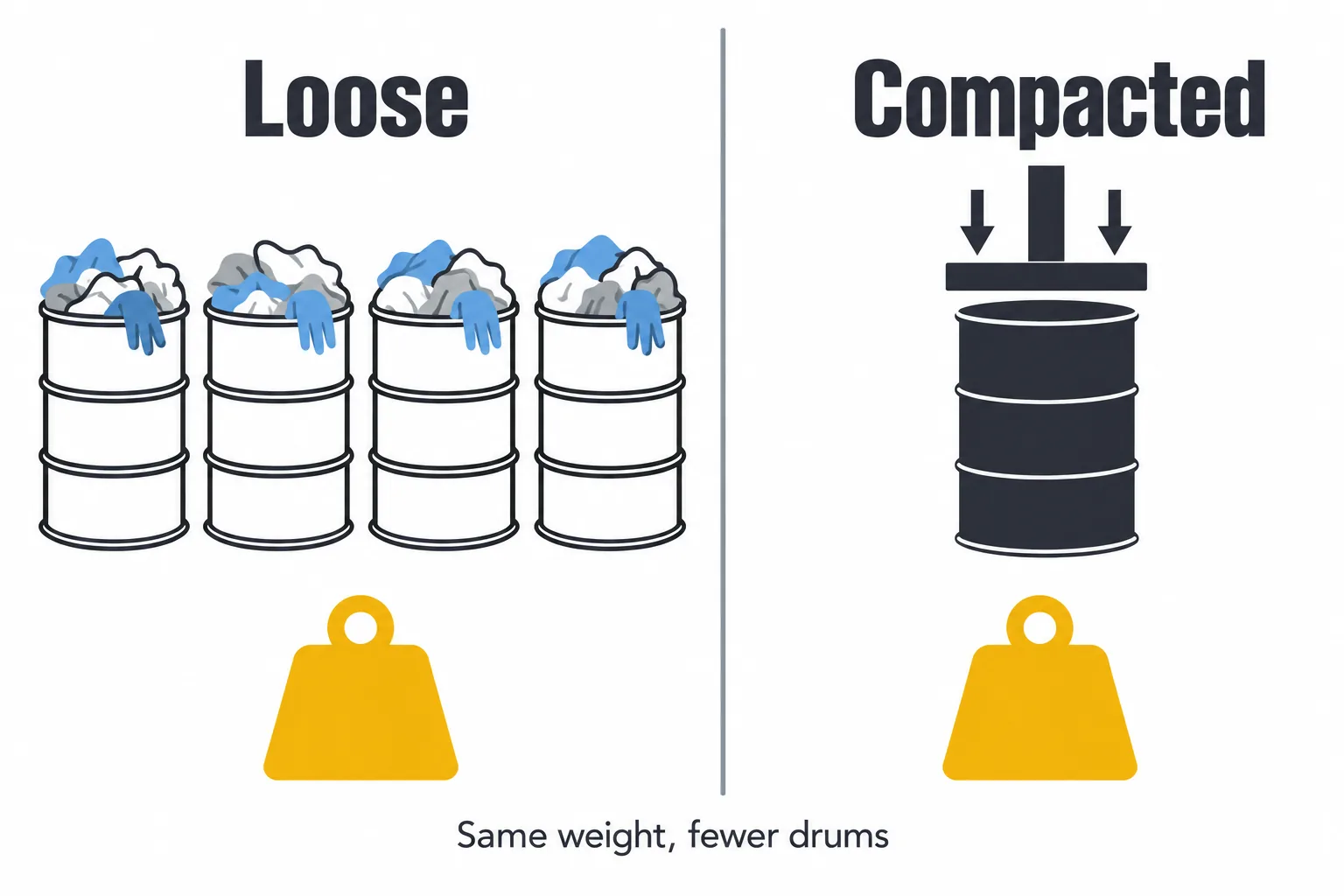
In-drum compaction suits bulky, low-density streams: contaminated rags and wipes, used PPE, spent absorbents, filters and general debris. These are the kinds of hazardous waste where a drum is mostly air until you compress it.
The profile carries the weight here. It should state that the waste is compacted and describe its physical form and approximate density. A densely packed drum weighs more and handles differently, and the receiving facility needs to plan for that.
Compaction doesn’t save the same amount under every pricing model. Ask your TSDF which one applies.
| TSDF pricing | Effect of compaction |
|---|---|
| Per drum | Usually cuts the bill, since you ship fewer drums |
| Per pound | Disposal fee barely changes, because total waste weight stays the same. Savings come from fewer containers, pickups and handling. |
| Per container or pickup | Fewer containers and fewer pickups lower the cost |
Settle one regulatory question up front. The RCRA definition of treatment in 40 CFR 260.10 covers any method designed to change the physical character of a hazardous waste, including rendering it reduced in volume.
Whether compacting your particular stream counts as regulated treatment depends on your situation, so talk it through with your TSDF and state agency before you start.
Compaction also pays off upstream. Fewer active drums mean fewer containers to label, inspect and count toward your satellite accumulation area requirements.
Will a TSDF Accept Compacted Drums? Why Loads Get Rejected
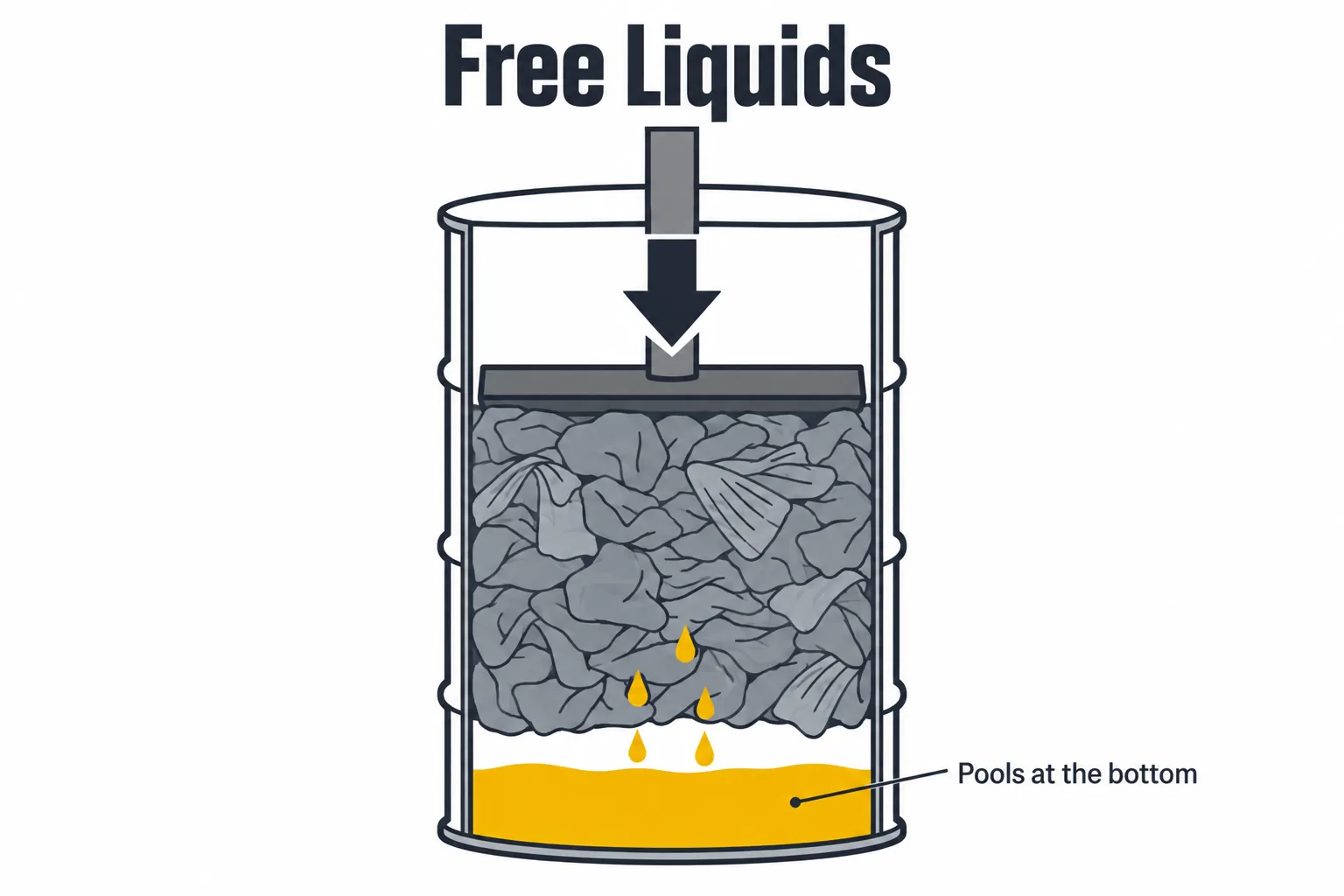
Most rejections trace back to a short list of causes:
- Free liquids. Compression squeezes liquid out of absorbents and solvent-soaked rags, and it pools at the bottom of the drum.
- Profile mismatch. New constituents, mixed streams or a physical form the profile doesn’t describe.
- Container condition. Bulging, dents, corrosion, leaks, or lids and bungs not properly closed.
- Overweight drums. Gross weight beyond the container’s rating or the facility’s handling limits.
- Labeling and marking gaps. Missing waste codes, dates or DOT markings. Our hazardous waste drum labeling guide walks through what each drum needs.
| Cause | What goes wrong | Fix before shipping |
|---|---|---|
| Free liquids | Compression squeezes liquid out of absorbents and rags, and it pools at the bottom | Add enough absorbent for what compression releases, and check the drum bottom before sealing |
| Profile mismatch | New constituents, mixed streams, or a form the profile doesn’t describe | Add compaction to the profile, and re-profile when contents change |
| Container condition | Bulging, dents, corrosion, leaks, or lids and bungs not closed properly | Inspect the lid, gasket and closing ring after compaction |
| Overweight drums | Gross weight exceeds the container’s rating or the facility’s handling limit | Compare the drum’s rating to the actual filled weight |
| Labeling and marking gaps | Missing waste codes, dates or DOT markings | Check each drum against the labeling guide before loading |
A fully or partially rejected load is noted as a discrepancy on the manifest, and the waste must go back to you or on to an alternate facility. Ask your TSDF in advance who covers the extra transport and handling.
Free Liquids: The Rule That Trips Up Compaction Programs
Under EPA’s landfill rule for containerized waste at 40 CFR 264.314, containerized hazardous waste with free liquids can’t be landfilled, and the presence of free liquids is determined with the Paint Filter Liquids Test (Method 9095B). If liquid passes through the filter, the waste fails.
Compaction programs that pass build in a few habits:
- Add enough absorbent for what compression releases, not just what’s visible beforehand.
- Run absorbent-heavy streams through equipment with drip capture.
- Check the drum bottom for pooled liquid before sealing.
Ask your TSDF whether it runs its own free-liquid check on receipt and what result triggers a rejection.
Will a TSDF Accept Compacted Drums? Questions to Ask Before You Compact
Bring this list to your next profile review or account call:
- Do you accept compacted waste for this stream? Does my profile need a revision, or a new profile?
- Do you accept crushed drums with residue, and in what outer packaging (overpack, roll-off, cubic yard box)?
- What are your free-liquid requirements, and how do you test on receipt?
- What is the maximum gross weight per drum or container?
- What disposal route will this stream take (landfill, incineration, fuel blending), and does compaction affect eligibility?
- Do you price per drum, per pound or per container?
- (For the hauler) Do you pick up drums at all, or only bulk loads? What DOT packaging and marking do you expect?
- What documentation do you want on how the compaction process works?
- What is your rejection and return policy, and who pays?
Some companies only take bulk loads and won’t handle drummed waste at all. Find that out before compaction changes how you package.
Updating Your Waste Profile for Compaction
Characterizing the waste remains the generator’s job. Compaction changes physical form, not the hazardous waste characteristics or listings, so your waste codes stay the same.
Add compaction to the profile so the facility isn’t surprised by density or form. Re-profile whenever the stream’s contents change, and keep records of how you made each determination.
Shipping Compacted Drums: Packaging and DOT Basics
Compacted drums still travel in DOT-compliant hazmat containers rated for the contents and the weight:
- Check the rating. A drum rated for a lighter load may not be rated for a densely compacted one. Compare the rating against actual filled weight.
- Close drums properly after compaction. Inspect the lid, gasket and closing ring. A drum that isn’t seated correctly can deform at the rim.
- Use overpacks for damaged drums and for crushed drums with residue.
For marking and labeling specifics, keep the drum labeling requirements handy at the loading dock rather than working from memory.
Where the Payoff Shows Up: Fewer Drums on the Floor
Once your TSDF and hauler sign off, the operational benefits follow: fewer labels, fewer inspections and fewer containers to track. Central accumulation areas stay easier to manage too, since lower drum counts make it simpler to hold the clearances in our guide to drum storage aisle spacing requirements and other OSHA drum storage requirements.
For the full cost picture, including pickup frequency and container spend, see our guide on how to reduce drum disposal costs.