Article Summary:
- Old gasoline requires proper classification as hazardous waste under EPA regulations
- Disposal methods vary based on fuel condition, contamination level, and volume
- Industrial facilities face specific compliance requirements for fuel waste management
- Volume reduction through approved systems cuts disposal costs by 40-60%
- Proper gasoline disposal protects worker safety and prevents environmental contamination
This guide explains how to dispose of old gas from industrial operations, covering classification requirements, approved disposal methods, cost considerations, and compliance protocols that keep your facility operating within EPA and state regulations.
When Gasoline Becomes Waste
Fuel doesn’t last forever. Gasoline starts breaking down after three to six months in storage, depending on conditions.
Temperature fluctuations accelerate degradation. Water condensation contaminates fuel tanks, especially in partially filled containers where air space allows moisture accumulation.
| Fuel Age | Condition | Usability | Disposal Status |
| 0-3 months | Fresh, stable | Full combustion capability | Not waste |
| 3-6 months | Minor oxidation | Reduced performance | Potentially waste |
| 6-12 months | Significant degradation | Poor combustion | Waste material |
| 12+ months | Heavy contamination | Non-combustible | Hazardous waste |
Old fuel from maintenance operations, equipment decommissioning, or tank cleaning generates waste streams that need proper handling under federal hazardous waste regulations.
Gasoline Classification Under EPA Rules
The EPA considers gasoline a characteristic hazardous waste due to ignitability. Any liquid with a flash point below 140°F qualifies as D001 ignitable waste under RCRA standards.
| Waste Code | Characteristic | Flash Point | Examples |
| D001 | Ignitable | Below 140°F | Gasoline, diesel, solvents |
| D002 | Corrosive | pH ≤2 or ≥12.5 | Acids, caustics |
| D003 | Reactive | Unstable compounds | Certain chemicals |
| D018 | Benzene (toxic) | Benzene content | Contaminated fuel |
Contaminated gasoline might carry additional waste codes. Fuel mixed with solvents, oils, or cleaning agents often qualifies under multiple hazardous waste categories.
Where to Take Old Gasoline
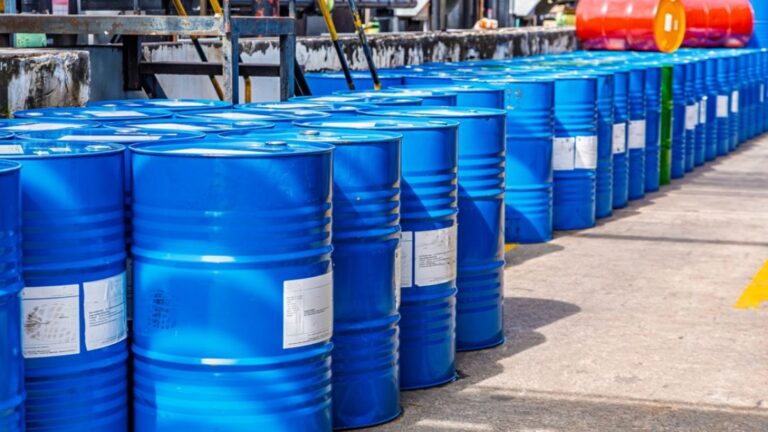
Licensed hazardous waste facilities provide the only legal disposal option for old gasoline from industrial operations.
| Disposal Method | Volume Limits | Typical Cost | Processing Time | Best For |
| Licensed hauler pickup | No limit | $250-$800 per drum | 1-3 weeks | Large volumes |
| Municipal collection | 5-25 gallons | $0-$50 | Event-based | Small quantities |
| Waste-to-energy | Varies by facility | $150-$500 per drum | 2-4 weeks | High-BTU fuel |
| Fuel blending (approved) | Large volumes | $100-$400 per drum | 1-2 weeks | Lightly degraded fuel |
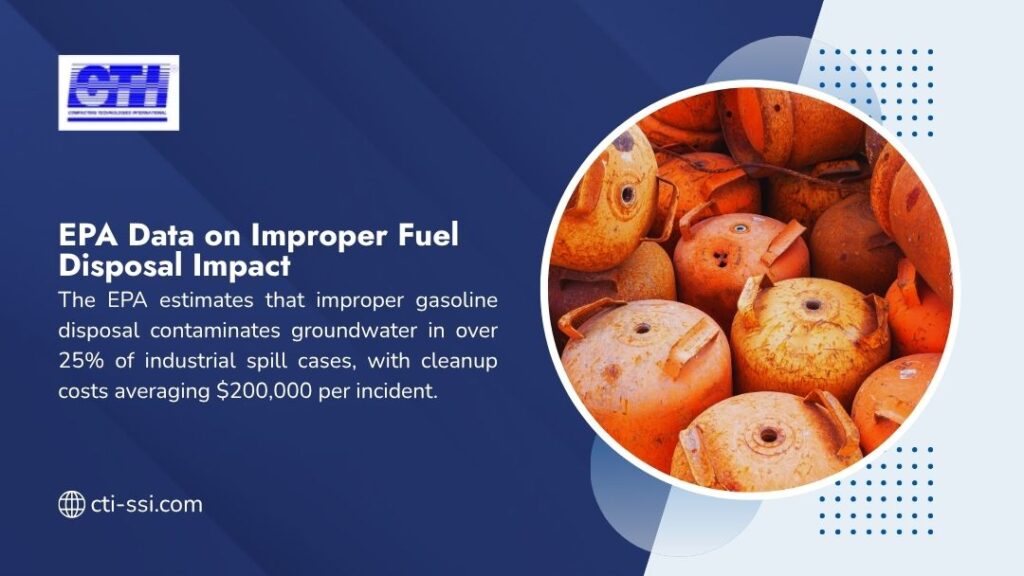
Research from the EPA shows that improper fuel disposal contaminates groundwater at rates exceeding 15 parts per billion in affected areas—well above the 5 ppb maximum contaminant level for benzene in drinking water.
The question of where to dispose of hazardous waste depends on your facility’s generator status, waste volume, and location.
Safe Storage Before Disposal
You can’t dispose of old gas immediately in most cases. Facilities need proper interim storage while arranging transportation and disposal services.
| Storage Requirement | Specification | Compliance Standard |
| Container type | DOT-approved for flammable liquids | 49 CFR 173 |
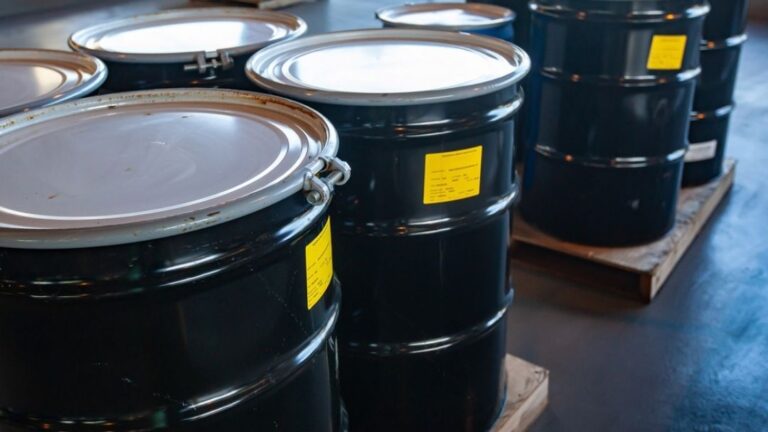
| Labeling | “Hazardous Waste” + accumulation date | 40 CFR 262 |
| Container condition | No rust, dents, or leaks | EPA guidelines |
| Secondary containment | 110% of largest container volume | 40 CFR 264.175 |
| Storage duration (SQG) | 180 days (270 if >200 miles) | 40 CFR 262.16 |
| Storage duration (LQG) | 90 days maximum | 40 CFR 262.17 |
Facilities must follow flammable cabinet requirements when storing gasoline waste indoors. These cabinets provide fire resistance and vapor control.
How to Get Rid of Bad Gas From Equipment
Maintenance operations generate contaminated fuel that needs removal before disposal.
Fuel Tank Draining:
- Use approved transfer pumps designed for flammable liquids
- Collect drained fuel in proper containers immediately
- Never use compressed air to push fuel from tanks
Filter and Separator Waste:
- Fuel filters contain saturated media that qualifies as hazardous waste
- Water separators collect water-contaminated fuel needing liquid waste disposal
Cleaning Residues:
- Tank cleaning generates sludge contaminated with gasoline
- Facilities sometimes use drum crushers to compact empty fuel containers
Compliance Requirements
| Regulation | Agency | Key Requirements | Violation Penalties |
| RCRA Subtitle C | EPA | Generator ID, manifests, training | $37,500-$75,000 per day |
| DOT Hazmat Rules | DOT | Packaging, labeling, placarding | $75,000+ per violation |
| OSHA Hazcom | OSHA | Worker training, SDS access | $15,625 per violation |
| State Programs | State EPA | Additional permits, reporting | Varies by state |
Key Documentation:
- EPA identification number (required for all generators)
- Hazardous waste manifests (keep 3 years minimum)
- Worker training records (annual refresher required)
- Biennial reports (large quantity generators only)
Cost Reduction Strategies
Gasoline disposal expenses add up quickly for facilities that generate waste regularly.
| Strategy | Cost Savings | Implementation |
| Volume consolidation | 15-25% | Combine small containers into larger drums |
| Scheduled pickups | 10-20% | Plan regular collection vs. emergency pickups |
| Waste characterization | Variable | Test for less expensive disposal pathways |
| Volume reduction/compaction | 40-60% | Reduce transportation frequency and drum count |
Facilities that handle 55 gallon drums of contaminated materials benefit from compaction systems that reduce overall waste volume.
Safety Protocols
| Safety Element | Requirement | Standard |
| Personal protection | Chemical gloves, safety glasses, face shield | OSHA 29 CFR 1910.132 |
| Respiratory protection | NIOSH-approved for organic vapors | OSHA 29 CFR 1910.134 |
| Ventilation | 1 CFM per square foot minimum | NFPA 30 |
| Fire extinguishers | Class B, 20-foot spacing | OSHA 29 CFR 1910.157 |
| Spill containment | 110% of largest container | EPA 40 CFR 112 |
| Emergency eyewash | Within 10 seconds of work area | ANSI Z358.1 |
Fire Prevention:
- Eliminate ignition sources near gasoline waste storage
- Ground and bond containers during fuel transfer
- Use explosion-proof electrical equipment in classified areas

What to Do With Contaminated Gasoline
Contamination changes how to dispose of old gas and affects which facilities can accept it.
| Contamination Type | Disposal Challenge | Solution |
| Water-contaminated | Creates aqueous-fuel mixture | Liquid waste management facilities |
| Oil-mixed | Blended waste stream | Waste-to-energy or specialized treatment |
| Solvent-contaminated | Additional hazard codes | Proper characterization required |
| Sediment and sludge | High disposal cost | Solidification before disposal |
According to EPA data, a single gallon of gasoline can contaminate one million gallons of groundwater.
Advanced Disposal Systems
Facilities that generate substantial gasoline waste volumes need specialized equipment to manage disposal efficiently and safely.
| System Feature | Purpose | Benefit |
| NEMA 7 explosion-proof | Prevents ignition in hazardous locations | Safe operation with flammable vapors |
| Liquid removal | Extracts liquids before compaction | Reduces disposal volume and cost |
| Activated carbon filtration | Captures VOCs during compression | Protects workers, meets air permits |
| HEPA filtration | Traps 0.3-micron particles at 99.97% | Prevents particulate release |
| Stainless steel construction | Allows easy decontamination | Handles multiple waste types safely |
CTI Safety Storage manufactures industrial waste compaction systems designed specifically for hazardous material applications. Their equipment features explosion-proof operation, liquid removal capabilities, and advanced filtration to handle gasoline-contaminated waste safely and efficiently.
Frequently Asked Questions (FAQ) On How To Dispose Of Old Gas
Can I mix old gasoline with fresh fuel to use it?
Small amounts of slightly aged gasoline (less than 6 months old) can sometimes blend with fresh fuel at ratios of 1:5 or less. However, industrial facilities should dispose of old gas through proper channels rather than attempting reuse.
How long can I store gasoline waste before disposal?
Small quantity generators have 180 days (or 270 days if shipping more than 200 miles). Large quantity generators face a 90-day maximum.
What happens to gasoline at disposal facilities?
Licensed facilities either incinerate gasoline waste for energy recovery or treat it through approved processes like distillation or chemical treatment.
Does gasoline disposal require special transportation permits?
Licensed hazardous waste transporters handle all permits. Facilities must use EPA-registered transporters and complete manifests correctly.
Can small quantities go to household hazardous waste collection events?
Some municipalities accept small amounts from businesses, but policies vary. Most programs restrict commercial quantities. Industrial facilities typically need commercial disposal services.

Final Considerations
Learning the methods on how to dispose of old gas, will keep your facility safe from potential regulatory issues, environmental liability, and safety issues.
Important to remember when starting the disposal process includes properly classifying waste used gasoline under RCRA classification, ensure only containers approved by DOT are used, develop the appropriate documentation manifest, and dispose of the waste at applicable disposal facilities.
Used gasoline waste generators should also consider volume reduction systems, which stabilize the waste for burning. Although equipment systems that reduce volume may require an initial investment of time, it will pay for itself within 18 to 24 months in a reduction in transportation and disposal cost.