Article Summary:
- RCRA empty container requirements define when hazardous waste containers no longer need regulated disposal
- Federal regulation 40 CFR 261.7 sets specific criteria for liquid, solid, and acutely hazardous waste containers
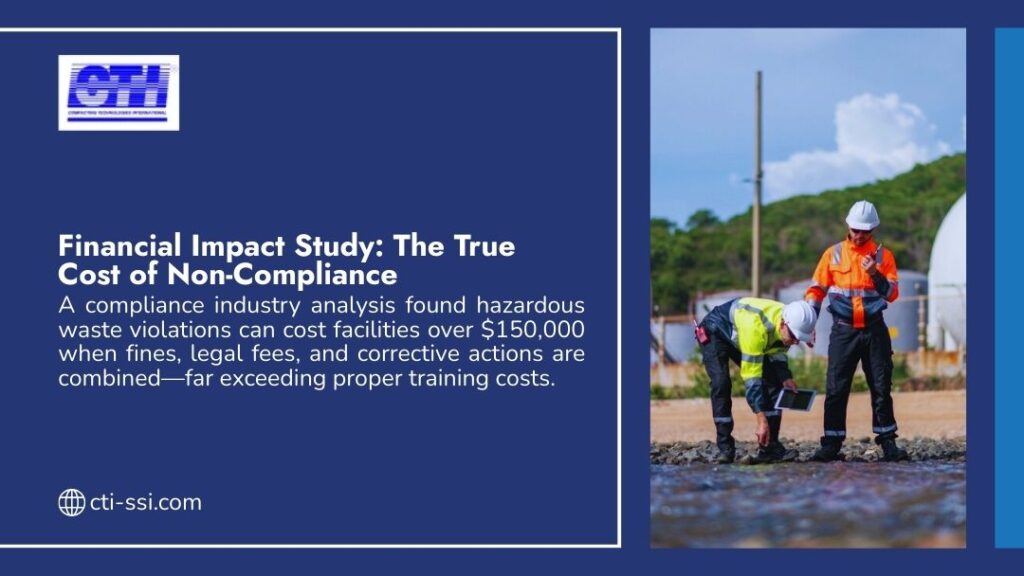
- Proper compliance prevents EPA fines ranging from $2,500 to $76,000 per violation
- Triple-rinsing and residue limits determine empty status for most liquid containers
- State regulations may add stricter requirements beyond federal RCRA standards
This guide explains RCRA empty container requirements for facilities that handle hazardous waste. It covers federal definitions, step-by-step compliance procedures, labeling rules, state variations, and documentation practices that satisfy EPA inspections.
What Does “RCRA Empty” Really Mean?
The EPA defines empty containers under 40 CFR 261.7 of the Resource Conservation and Recovery Act. This regulation determines when a container no longer counts as hazardous waste under federal law.
A container meets RCRA empty status when all materials have been removed through normal methods and specific residue limits are met. The definition varies based on what the container held.
For liquid wastes, less than one inch of residue can remain in containers up to 110 gallons. Larger containers can have up to 3% residue by weight. Containers must also go through proper rinsing or cleaning procedures.
| Container Status | Regulatory Treatment | Disposal Requirements | Key Difference |
| RCRA Empty | Non-hazardous waste | Standard solid waste disposal | Meets 40 CFR 261.7 criteria |
| Decontaminated | Non-hazardous waste | Standard solid waste disposal | All residue removed beyond RCRA standards |
| Contains Residue | Hazardous waste | RCRA-regulated disposal required | Does not meet empty criteria |
Empty does not mean the same as decontaminated. A container can be RCRA empty but still have visible residue inside. Decontamination goes further and removes all traces of the previous contents.
Lab solvent bottles show this difference clearly. A methylene chloride bottle with a thin film of liquid might qualify as RCRA empty. The same bottle would need complete cleaning to count as decontaminated for reuse with different chemicals.
How to Determine If a Container is RCRA Empty
Facilities must follow specific procedures based on container type and previous contents. The process starts with identification of what hazardous waste the container held.
Check the waste code on the container label. This determines which emptying procedure applies. P-listed and U-listed wastes have different requirements than characteristic wastes like corrosives or ignitables.
Document the emptying process. Records prove compliance during EPA inspections. Many facilities use checklists that workers complete when they empty each container.
| Waste Type | Empty Criteria | Procedure Required | Inspection Focus |
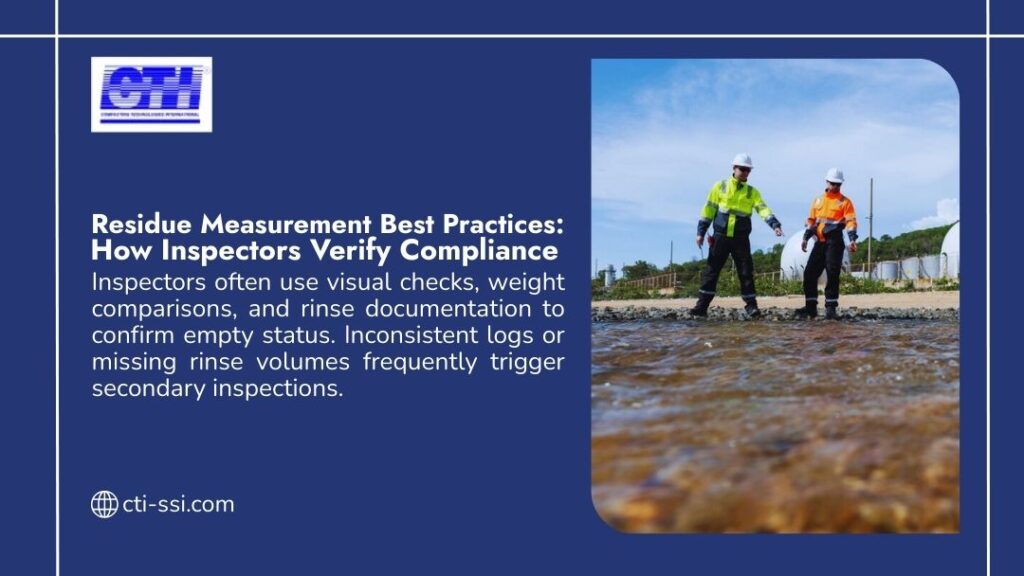
| Liquid (non-acute) | <1 inch or <3% by weight | Triple rinse or equivalent | Residue measurement, rinse documentation |
| Solid (non-acute) | Removal by normal means | Scrape, shake, or similar | Visual inspection, removal method |
| Acutely hazardous (P-list) | Triple rinsed or equivalent | Inner liner removal required | Complete documentation, visual verification |
- Liquid Waste Containers
Liquid containers need triple-rinsing to meet RCRA empty container requirements in most cases. Each rinse uses a volume equal to at least 10% of container capacity.
The rinse liquid must be compatible with the original contents. Water works for water-soluble materials and solvents may need other solvents for effective rinsing.
The rinse material becomes hazardous waste that requires proper disposal.
A 55-gallon drum that holds acetone needs at least 5.5 gallons per rinse. Three rinses use 16.5 gallons total and it must go through the same waste disposal procedures as the original drum contents.
Flammable liquids create special concerns. Drums that hold gasoline, toluene, or other ignitables need grounding and bonding during the rinse process.
Some facilities use drum washers that automate the triple-rinse process, as these machines maintain consistent procedures and create automatic documentation.
They work well for facilities that empty many drums regularly.
- Solid Waste Containers
Solid waste containers become RCRA empty when materials are removed by pouring, pumping, or aspirating. Small amounts may stick to container walls.
Scraping and shaking help remove additional material. Workers can use non-sparking tools to scrape residue from drum interiors. The scraped material joins the main waste stream for disposal.
Solids which need extra caution are reactive materials like sodium hydroxide or calcium oxide that can generate heat when exposed to moisture. Make sure to empty these containers in controlled conditions with proper ventilation.
Even small residues keep containers classified as hazardous until proper emptying procedures are complete. A drum with a half-inch layer of dry chemical powder still requires RCRA hazardous waste handling until that residue is removed.
| Solid Type | Removal Method | Acceptable Residue | Special Considerations |
| Powders/crystals | Pour and shake | Thin dust coating | Prevent dust generation |
| Sludges/pastes | Scrape with tools | Film on container walls | Use compatible tools |
| Reactive solids | Controlled removal | Minimal visible residue | Moisture control critical |
- Acutely Hazardous Waste Containers
Containers that held P-listed acutely hazardous wastes face stricter standards. These materials pose severe health risks even in tiny amounts.
Triple-rinsing remains mandatory for P-list containers. Some states require inner liner removal as an additional step. The liner itself becomes acutely hazardous waste after removal.
Mercury presents common challenges in laboratories. Small bottles that held mercury compounds need thorough cleaning. The liquid waste management procedures for mercury rinse water must prevent environmental release.
Facilities should track P-list containers separately from other empties. This prevents confusion during inspections and ensures proper handling throughout the process.
Labeling, Storage, and Disposal Requirements
Proper labels prevent confusion and demonstrate compliance. Each container needs clear marking that shows its current status.
RCRA empty containers should have labels that state “RCRA Empty” or “Empty per 40 CFR 261.7.” Keep the original hazardous waste label visible but defaced or marked as no longer applicable.
Storage areas for empty containers should be separate from areas holding full hazardous waste containers. This separation prevents mistakes and makes inspections clearer.
| Label Element | Required Information | Placement | Inspection Criteria |
| Empty status | “RCRA Empty” or “Empty per 40 CFR 261.7” | Front of container | Clear, legible, weatherproof |
| Previous contents | Original waste label (defaced/marked) | Original location | Shows what container held |
| Empty date | Date empty criteria met | Near status label | Tracks storage time |
| Responsible party | Department or person | Any visible location | Accountability during audits |
Disposal pathways depend on container material and condition. Steel drums in good shape can go to reconditioning companies and damaged containers need standard solid waste disposal after RCRA empty status is verified.
Some facilities reuse RCRA empty containers for the same hazardous waste types. This practice is legal when containers maintain proper labeling.
Federal vs State Requirements
Federal RCRA empty container requirements set the baseline. States can add stricter rules but cannot make requirements more lenient than federal standards.
California requires generators to manage empty containers as universal waste in some cases. New York adds specific timeframes for container storage after empty status is achieved. Texas has detailed guidance on container reconditioning that goes beyond federal rules.
Facilities in multiple states face complex compliance landscapes. A company with plants in Michigan, Georgia, and California must follow three different sets of rules for the same basic process.
| State | Key Deviation from Federal | Additional Requirements | Enforcement Priority |
| California | Universal waste rules apply | Stricter storage limits | Container tracking |
| New York | 90-day storage maximum | Enhanced documentation | Label compliance |
| Texas | Reconditioning standards | Facility registration | Process verification |
| Illinois | Residue measurement rules | Quarterly reporting | Inspection frequency |
Managing Multi-State Compliance
Standardize procedures to meet the strictest state in your operations. This approach simplifies training and reduces errors from varying requirements.
Create a compliance matrix that shows requirements by state. Update this document when regulations change. Many states revise rules every 2-3 years.
Assign compliance responsibility to specific staff members. One person should track regulatory changes across all operational states. This prevents gaps where nobody monitors updates.
Common State Misconceptions
Some states allow alternative rinsing procedures beyond triple-rinsing. These alternatives must achieve equivalent residue removal. Facilities need documentation that proves alternative methods work as well as standard procedures.
Other states require extra paperwork for empty containers. Manifests or disposal certificates may be mandatory even when federal rules do not require them.
Companies often assume federal compliance equals state compliance. This mistake causes violations when state rules add requirements. Always check state regulations separately from federal standards.
Documentation and Audit Readiness
EPA inspectors expect specific records when they review empty container procedures. Facilities must produce documentation that proves RCRA empty container requirements were met for each container.
Required records include empty dates, procedures used, and staff who performed the work. Many facilities use logbooks where workers sign off on each emptying task.
Retention periods vary by state but three years represents a common minimum. Some states require five-year retention. Digital records work as well as paper records if they are accessible during inspections.
| Document Type | Required Information | Retention Period | Inspection Use |
| Empty container log | Container ID, empty date, method, staff signature | 3-5 years | Procedure verification |
| Rinse records | Volume used, rinse count, disposal route | 3-5 years | Compliance proof |
| Training records | Staff name, training date, topics covered | Duration of employment + 3 years | Staff competency |
| Inspection reports | Internal audit findings, corrective actions | 5 years minimum | Improvement demonstration |
Signage helps during inspections. Post RCRA empty criteria in storage areas. Include the specific residue limits and procedures for your facility’s waste types.
Keep copies of state correspondence about container management. Letters requesting clarification or confirming interpretation of rules provide protection if disputes arise later.
Common Compliance Mistakes and How to Avoid Them
Labeling errors cause frequent violations. Containers marked as empty without meeting the actual criteria create liability and workers who do not understand the rules may label containers too early.
Storage mistakes happen when empty containers mix with full containers. Inspectors cannot verify compliance when storage areas lack organization.
Staff training gaps also allow errors to persist, which often happens because new employees may not learn proper procedures or experienced workers may forget details over time.
| Common Mistake | Consequence | Prevention Method |
| Incomplete rinsing | Container still hazardous | Procedure checklists, verification steps |
| Wrong labels | Confusion during inspections | Label templates, quality checks |
| Missing documentation | Cannot prove compliance | Digital tracking systems |
| Premature disposal | Hazardous waste in solid waste stream | Multi-step verification |
Internal Audits and Training
Quarterly internal audits catch problems before EPA inspections. Assign someone not involved in daily operations to review procedures and records.
Refresher training should occur annually for all staff who handle containers. Cover changes in regulations and review common mistakes from internal audits.
Your best defense against EPA violations comes from a trained team that understands why procedures matter. Training that explains the reasons behind rules creates better compliance than training that just lists steps to follow.
Use competency tests after training. Workers should demonstrate proper rinsing, labeling, and documentation before they work independently. Keep test results in training files.
Frequently Asked Questions About RCRA Empty Container Requirements
What documentation do inspectors expect for an RCRA empty container?
Inspectors want records that prove containers meet the regulatory definition. This includes logs showing empty dates, the specific procedure used, and which staff member performed the work.
Can an RCRA empty container be reused or sold?
Yes, RCRA empty containers can be reused for the same waste type without additional treatment. Selling or reconditioning containers is also legal once they meet empty criteria. However, containers need complete decontamination before use with different materials.
How does DOT regulation intersect with RCRA empty status?
Department of Transportation rules apply during shipping even when containers are RCRA empty. Empty labels required by DOT differ from RCRA empty labels. A container can be RCRA empty but still need DOT hazardous material placards if residue exceeds DOT thresholds.
Do emergency releases affect empty container status?
Emergency spills change how containers must be handled. A container that becomes empty during emergency response may not meet normal RCRA criteria. Document the circumstances and treat the container as hazardous waste until proper emptying procedures occur. Never rely on emergency conditions to justify skipping required steps.
How should facilities handle containers with mixed hazardous wastes?
Mixed waste containers follow the same empty criteria as single-waste containers. The waste code determines procedure requirements and if the mixture includes P-listed materials, use P-list procedures for the entire container.
Are triple-rinsing requirements always mandatory?
Triple-rinsing is mandatory for containers that hold liquid hazardous wastes unless an equivalent method is used. Equivalent methods must remove the same amount of residue as three rinses. Some approved alternatives include steam cleaning or pressure washing with documentation of residue removal.
What is the difference between RCRA empty and decontaminated containers?
RCRA empty containers meet minimum federal standards under 40 CFR 261.7. They may still have visible residue within allowed limits. Decontaminated containers have all residue completely removed through additional cleaning.
Final Considerations
Facilities that understand RCRA empty container requirements avoid costly violations while reducing waste disposal expenses. The regulations provide clear criteria when containers stop being hazardous waste.
Critical steps include proper identification of waste types, procedures that match container contents and waste codes, complete documentation of all emptying work, labels that clearly show container status, and regular staff training on current requirements.
Most violations occur from procedural shortcuts rather than lack of knowledge. Taking time to rinse properly, document thoroughly, and label correctly prevents problems.
Empty containers represent an opportunity. Facilities that handle them correctly reduce disposal costs and create potential revenue through reconditioning programs. Those that ignore proper procedures face fines that exceed any savings from shortcuts.
EPA enforcement has increased in recent years. Regional offices conduct more inspections and issue larger penalties for violations. Compliance protects facilities from both financial and legal consequences.