Article Summary:
- Different bulb types require different disposal methods based on mercury content and materials
- Mercury-containing bulbs qualify as Universal Waste under EPA regulations
- Improper disposal creates environmental contamination and regulatory violations
- Commercial facilities face specific compliance requirements for bulk bulb disposal
- Proper waste systems reduce disposal costs by 50-70% through volume reduction
This guide explains how to dispose of light bulbs in commercial and industrial settings. We will cover the right steps for each type of bulb, the safety rules you must follow, how to collect bulbs without breaking them, and cost-effective ways to manage disposal.
Why Disposing Light Bulbs Is Important?
A majority of the establishments use to replace hundreds or even thousands of their bulbs every year. Knowing how to dispose of light bulbs safely is important because different types of bulbs come with different hazards and disposal methods.
One of the major problems created by mercury-containing fluorescent bulbs is the release of toxic vapors when they are broken.
Just one four-foot fluorescent tube gives off about 4-5 milligrams of mercury, which is enough to render 6,000 gallons of water unfit for human consumption according to the EPA’s safe levels.
Mercury hazard is not an issue with LED and incandescent bulbs but still, there are some materials which proper recycling will give them back their value. Glass parts, metal bases, and electronic circuits are types of resources that can be recovered.
Disposal Type Impact:
| Disposal Method | Environmental Risk | Compliance Status | Typical Cost |
| Landfill (mercury bulbs) | High contamination | Illegal | Penalties $37,500+ |
| General trash (LEDs/incandescent) | Low | Varies by state | Minimal |
| Recycling facility | Minimal | Compliant | $0.50-$2.00 per bulb |
| Universal waste handler | Minimal | Fully compliant | $1.00-$3.00 per bulb |
Facilities that throw away a lot of light bulbs need simple systems to collect them, keep them safe, and get them ready for proper disposal or recycling.
Types of Light Bulbs and Classification
- Incandescent and Halogen Bulbs
Traditional incandescent bulbs contain tungsten filaments sealed in glass envelopes. These bulbs qualify as general waste in most jurisdictions.
Halogen variants operate at higher temperatures but use similar construction. Neither type contains mercury or hazardous materials that trigger special disposal requirements.
However, broken glass creates safety hazards. Facilities should package these bulbs securely before disposal even when regulations don’t mandate special treatment.
- LED Bulbs
Light-emitting diode technology avoids mercury entirely. LEDs contain electronic components, circuit boards, and metal heat sinks.
While LEDs don’t qualify as hazardous waste, they fall under electronic waste categories in some states. Many recyclers accept LEDs to recover aluminum, copper, and rare earth elements from circuit boards.
The electronics industry recovers materials worth $15-20 per ton from LED recycling, creating economic incentives for proper collection programs.
- Mercury-Containing Bulbs
Compact fluorescent lamps (CFLs), linear fluorescent tubes, high-intensity discharge (HID) lamps, and metal halide bulbs all contain mercury vapor. These products qualify as Universal Waste under federal EPA regulations.
Here is a table that shows the mercury content of different bulb types:
| Bulb Type | Mercury Content | Annual Volume (typical facility) |
| 4-foot fluorescent | 4-5 mg | 500-2,000 tubes |
| 8-foot fluorescent | 8-10 mg | 200-800 tubes |
| CFL | 2-4 mg | 300-1,500 bulbs |
| HID/metal halide | 15-40 mg | 50-200 bulbs |
Federal law prohibits how to dispose of light bulbs, especially mercury-containing ones, in standard waste streams. Facilities must treat these as hazardous waste examples that require specialized collection and recycling.
Risks of Improper Light Bulb Disposal
Mercury Contamination
In landfills, when fluorescent bulbs are broken, they release mercury which eventually gets into the groundwater.
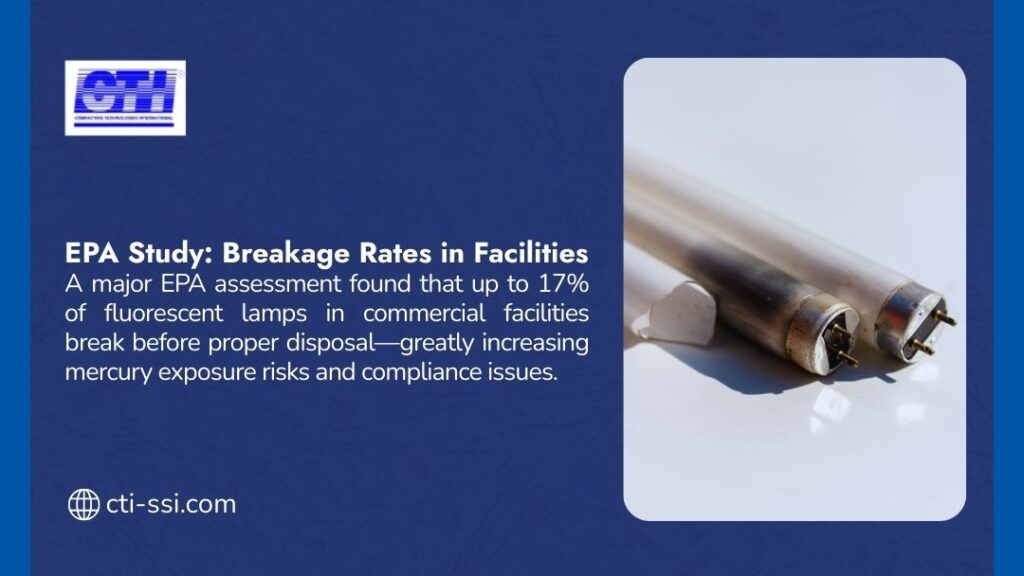
According to EPA studies, the risk of mercury contamination in soil, air, and water increases if fluorescent bulbs break or are disposed of in landfills because they can emit mercury during such incidents.
The very low limit for mercury in drinking water (2 ppb) implies even tiny releases can raise big environmental concerns.
Workers’ safety is at risk immediately due to airborne mercury from broken bulbs. Neurological impairment is the effect of vapor exposure at concentrations higher than 0.05 mg/m³.
Regulatory Violations
Compliance Framework:
| Regulation | Agency | Requirement | Violation Cost |
| Universal Waste Rule | EPA | Proper storage, labeling, disposal | $37,500 per day |
| State mercury laws | State EPA | Additional restrictions | Varies by state |
| OSHA Hazcom | OSHA | Worker training, protection | $15,625 per violation |
Twenty-three states enforce stricter mercury disposal laws than federal baselines. California, Maine, Vermont, and Washington prohibit any mercury lamp disposal in solid waste.
Glass and Contamination Hazards
Broken bulbs create sharp glass fragments that cut workers and contaminate other waste streams. Facilities face additional cleanup costs when broken fluorescent tubes contaminate regular trash—often requiring full container disposal as hazardous waste.
How to Dispose of Light Bulbs: The Proper Methods by Type
- Incandescent and Halogen Disposal
These bulbs typically go in general waste after proper packaging prevents glass breakage.
Here are the safe disposal Steps:
- Place bulbs in original packaging or wrap in paper/cardboard
- Seal in puncture-resistant bags or boxes
- Label containers “Glass, Handle Carefully”
- Dispose with regular facility waste
Some facilities prefer recycling even for incandescent bulbs. Glass recycling programs accept these bulbs when separated from other materials.
- LED Bulb Disposal
Even though LED bulbs don’t contain materials which are hazardous, they still benefit from recycling to recover electronic components.
Many retailers accept LED bulbs for recycling. Home improvement stores and electronics recyclers provide free drop-off for residential quantities. Commercial facilities typically arrange bulk pickup through electronics recyclers.
State e-waste programs sometimes include LEDs. Check with your household hazardous waste disposal program.
- Mercury Bulb Disposal Requirements
Bulbs that contain mercury must be handled carefully because they are covered by Universal Waste rules.
Here is a table that shows the basic requirements for these bulbs:
| Requirement | Specification | Regulation |
| Container type | Rigid, enclosed, prevents breakage | 40 CFR 273.13 |
| Labeling | “Universal Waste—Lamps” or “Waste Lamps” | 40 CFR 273.14 |
| Storage duration | 1 year maximum | 40 CFR 273.15 |
| Breakage containment | Sealed containers, cleanup procedures | 40 CFR 273.13(d) |
Never crush or compact mercury-containing bulbs. Breakage releases mercury vapor, creates cleanup obligations, and may change waste classification from Universal Waste to fully regulated hazardous waste.
Bulk Disposal for Commercial Facilities
Large facilities generate hundreds of bulbs monthly. Proper systems reduce costs and simplify compliance.
Collection and Segregation
Separate bulbs by type at the point of removal. Mercury bulbs require a different collection than LEDs or incandescent types.
Collection System Design:
- Designate specific storage areas for each bulb type
- Use clearly labeled collection drums or boxes
- Train maintenance staff on proper segregation
- Establish regular pickup schedules with licensed recyclers
Container Selection
Mercury bulbs need specialized packaging that prevents breakage during storage and transport.
Approved containers include:
- Drum-top bulb crushers with mercury capture (for facilities with proper permits)
- Fiber drums lined with sealed plastic bags
- Corrugated boxes specifically designed for fluorescent tubes
- Reusable bulb shipping containers from recyclers
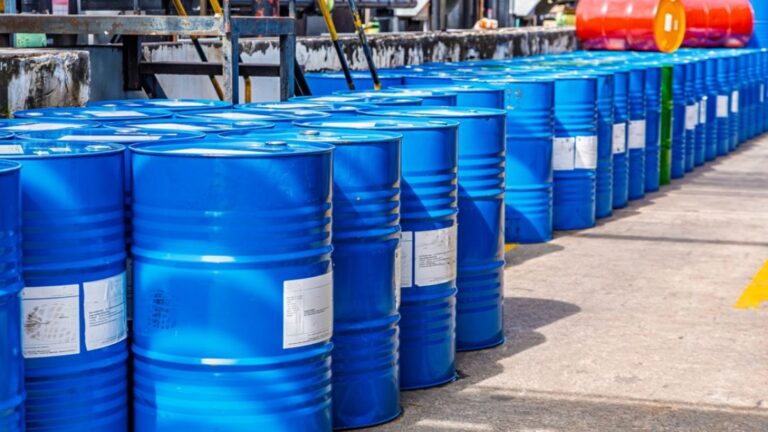
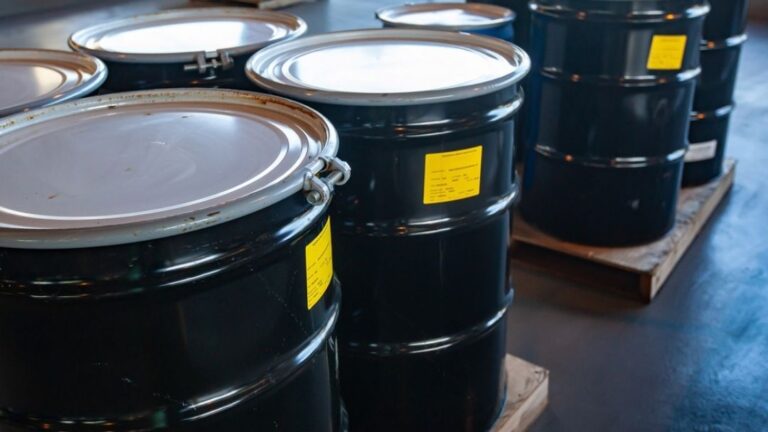
Some facilities use hazardous waste barrel systems that consolidate multiple waste streams safely. Standard 55-gallon drums hold approximately 200 four-foot fluorescent tubes when properly packed.

Licensed Disposal Services
Only EPA-registered Universal Waste handlers can transport and recycle mercury-containing bulbs.
Service Comparison:
| Service Type | Cost Range | Pickup Frequency | Best For |
| Mail-back programs | $0.75-$1.50 per bulb | On-demand | Small volumes |
| Scheduled pickup | $1.00-$2.00 per bulb | Monthly/quarterly | Medium volumes |
| Full-service waste management | $0.50-$1.25 per bulb | Weekly/monthly | Large facilities |
Verify that your service provider holds proper permits. Request copies of EPA identification numbers and state licenses before signing disposal contracts.
Safe Handling and Transport Protocols
Packaging Standards
Proper packaging prevents breakage during internal handling and external transport.
Packaging Protocol:
- Place bulbs in original cartons when available
- Use bubble wrap or foam spacers between individual bulbs
- Fill void spaces in containers to prevent shifting
- Seal containers completely
- Label all six sides clearly
Never stack more than three container levels. Excess weight crushes bottom containers and breaks bulbs.
Broken Bulb Cleanup
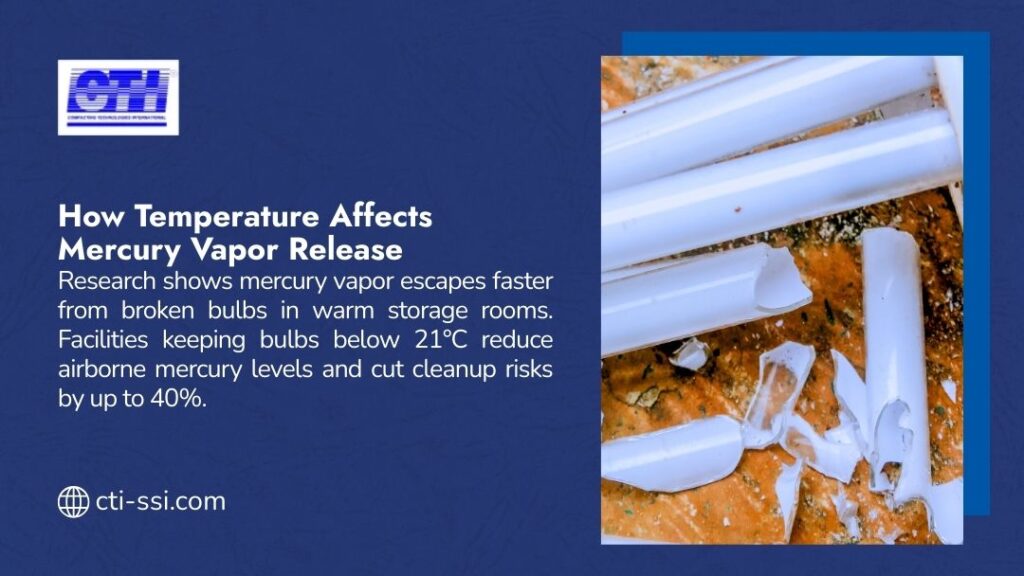
Mercury releases when fluorescent bulbs break. Follow strict cleanup procedures immediately.
Cleanup Steps:
- Evacuate the area for 15 minutes (allows vapor dispersal)
- Shut down HVAC systems that could spread contamination
- Wear nitrile gloves and safety glasses
- Use stiff cardboard or plastic scraper to collect large pieces
- Apply duct tape to capture small fragments and powder
- Place all materials in sealed plastic bags
- Wipe area with damp paper towels
- Dispose of all cleanup materials as Universal Waste
Never use vacuum cleaners for mercury bulb cleanup. Vacuums aerosolize mercury, spreading contamination throughout the building.
Documentation and Record-Keeping
Maintain complete records for all mercury bulb shipments.
Required documentation includes:
- Universal Waste shipping logs
- Recycler certificates of disposal/recycling
- Annual quantity reports (if applicable)
- Employee training records
- Broken bulb incident reports
Keep records for three years minimum. Some states require five-year retention.
Environmental and Economic Benefits of Recycling
Material Recovery
Bulb recycling recovers valuable materials that offset disposal costs.
Recoverable Materials from 1,000 Fluorescent Tubes:
| Material | Quantity | Recovery Value |
| Glass | 550 lbs | $15-20 |
| Aluminum (end caps) | 45 lbs | $40-50 |
| Steel (pins, brackets) | 12 lbs | $3-5 |
| Mercury | 15-20 grams | N/A (toxic, requires treatment) |
| Phosphor powder | 8 lbs | $10-15 (contains rare earths) |
Glass becomes new bulbs, fiberglass insulation, or concrete aggregate. Metal components feed steel and aluminum mills. Mercury undergoes distillation for reuse in industrial processes.
Contamination Prevention
Proper disposal helps to prevent the mercury from entering the environment.
Some guidelines from the EPA show that fluorescent bulbs contain mercury and if they break, some of that mercury can be released into the air or waste stream.
If we don’t handle the mercury leaking correctly, even small amounts can create big environmental risks.
Professional Disposal Systems for High-Volume Generators
Facilities that replace hundreds of bulbs monthly benefit from specialized waste management equipment and services.
Waste Consolidation Equipment
Volume reduction cuts disposal costs substantially. Proper systems compact waste safely while maintaining compliance.
System Features for Bulb Waste:
| Feature | Purpose | Application |
| Separate chambers | Segregate waste types | Multi-waste facilities |
| Sealed construction | Contain mercury vapor | Mercury bulb processing |
| HEPA filtration | Capture 99.97% of 0.3-micron particles | Air quality compliance |
| Liquid removal capability | Extract residual fluids | Mixed waste streams |
| Explosion-proof components | Safe operation with flammable waste | Multi-hazard facilities |
Make Waste Disposal Safer and Easier with CTI Compactors
If your business deals with large amounts of hazardous and chemical waste, CTI compactors make your work easier and safer.
We have machines that crush drums or compact waste tightly, so you use less space and save money on disposal and hauling fees.
CTI compactors keep dangerous materials sealed inside which help you with following safety rules and avoid spills or leaks. With cleaner, safer waste storage, your workplace becomes more organized and less risky for your team and the environment.
If you want a reliable solution for waste disposal and storage, request a free quote with us to make waste handling simpler, safer, and more cost‑effective.