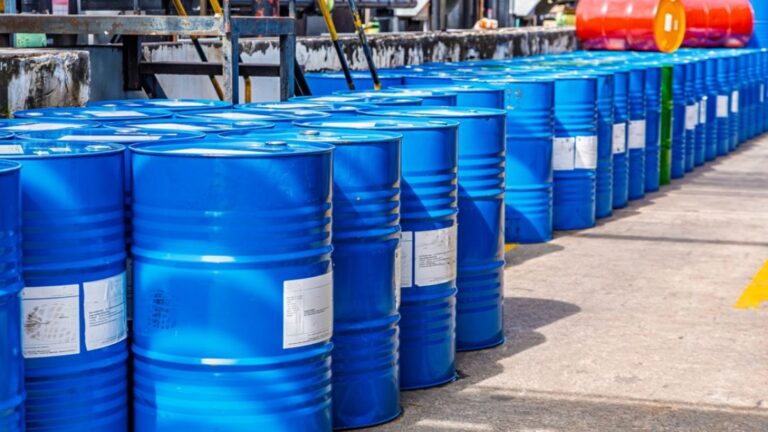
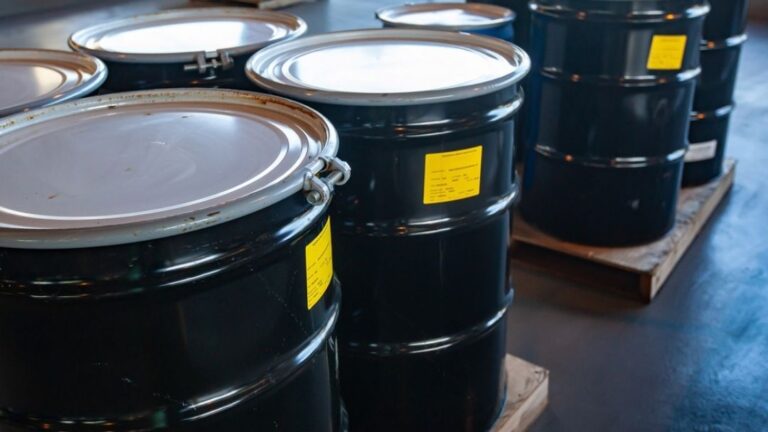
This guide explains how to dispose of antifreeze safely through approved collection centers, recycling programs, and hazardous waste facilities.
Learn classification requirements, storage protocols, and legal disposal options that protect the environment and keep you compliant with federal regulations.
Is Antifreeze Hazardous Waste?
Antifreeze qualifies as hazardous waste once it becomes contaminated with use.
Fresh coolant from unopened containers carries low toxicity risk, but used antifreeze accumulates heavy metals, oils, and chemical byproducts during engine operation.
The EPA does not automatically classify all antifreeze as hazardous waste. Classification depends on contamination level and chemical content. Most used coolant from automotive applications contains lead, benzene, and other toxins that meet hazardous waste criteria.
EPA guidance on managing and recycling used antifreeze explains how it should be handled rather than discarded improperly.
Ethylene Glycol vs Propylene Glycol
Two main types of antifreeze exist with different toxicity profiles:
Ethylene glycol (traditional antifreeze):
- Highly toxic to humans and animals
- Sweet taste attracts pets and wildlife
- Causes kidney failure when swallowed
- Requires stricter disposal protocols
Propylene glycol (newer formulations):
- Lower toxicity than ethylene glycol
- Still requires proper disposal
- Cannot go down drains or into soil
- Less hazardous but not safe for environment
Both types need appropriate disposal channels regardless of toxicity level.
Why Used Antifreeze Becomes Hazardous
Clean antifreeze transforms into contaminated waste through engine contact. Used coolant contains:
| Contaminant Source | Toxic Component | Health Risk |
| Engine wear | Lead, zinc, copper | Neurological damage, organ failure |
| Combustion byproducts | Benzene, toluene | Cancer risk, respiratory problems |
| Oil contamination | Petroleum hydrocarbons | Groundwater pollution |
| Rust and corrosion | Iron oxide, chromium | Water supply contamination |
One gallon of antifreeze can contaminate one million gallons of fresh water according to EPA studies. This contamination persists for years in soil and groundwater.
Can You Pour Antifreeze Down the Drain or Ground?
No, you can’t pour antifreeze down the drain or ground.
Federal and state regulations prohibit antifreeze disposal through drains, sewers, or direct ground contact. The EPA household hazardous waste guidance explains why these substances cannot go into regular waste streams
The Clean Water Act classifies improper antifreeze disposal as illegal discharge of pollutants. Municipal treatment plants cannot remove ethylene glycol and heavy metals effectively.
These chemicals pass through treatment systems and contaminate water supplies.
Environmental Consequences
Antifreeze seeps through soil rapidly after ground disposal. It reaches groundwater within days in permeable soil conditions. Once in aquifers, contamination spreads across large areas and affects drinking water sources for entire communities.
Surface water contamination kills fish and aquatic life. Antifreeze reduces dissolved oxygen levels and disrupts aquatic ecosystems. The sweet taste attracts animals who drink contaminated water and suffer toxic poisoning.
Legal Penalties
EPA violations range from $25,000 to $50,000 per day for knowing violations of hazardous waste regulations. State environmental agencies add additional penalties and potential criminal charges for severe violations.
Property owners face cleanup costs when antifreeze contamination occurs on their land. Remediation expenses often exceed $50,000 for residential properties and reach hundreds of thousands for commercial sites.
How to Dispose of Antifreeze Properly
Knowing how to dispose of antifreeze correctly depends on your location, the volume of coolant, and whether the waste comes from household or commercial sources.
Several approved disposal methods exist depending on your location, waste volume, and antifreeze type. The key is to understand how to dispose of antifreeze through authorized channels that handle hazardous materials safely.
Option 1: Household Hazardous Waste Collection Programs
For most homeowners, how to dispose of antifreeze legally starts with household hazardous waste (HHW) facilities, which accept used coolant at no charge or minimal cost.
What HHW Programs Accept:
- Used antifreeze from personal vehicles
- Contaminated coolant mixtures
- Empty antifreeze containers (triple-rinsed)
- Small quantities from DIY maintenance
Typical Requirements:
- Proof of residency
- Quantity limits (usually 5-15 gallons per visit)
- Containers must be sealed and labeled
- Separate from other automotive fluids
Check your county’s website or call local waste management offices for collection schedules and locations. Many programs operate on specific dates or by appointment only.
Option 2: Auto Parts Stores and Service Centers
National auto parts chains and independent service centers sometimes accept used antifreeze. Store policies vary significantly by location and corporate guidelines.
Stores That May Accept Used Antifreeze:
- AutoZone (selected locations)
- O’Reilly Auto Parts (some stores)
- Advance Auto Parts (varies by region)
- Independent repair shops (call ahead)
Always call before transport. Ask about:
- Volume limits per drop-off
- Container requirements
- Hours when they accept waste
- Any fees or restrictions
Service centers that change coolant professionally often have disposal contracts already in place and may accept small quantities from customers.
Option 3: Antifreeze Recycling Centers
Specialized recycling facilities reclaim ethylene glycol and propylene glycol for reuse. This represents the most environmentally responsible option when available in your area.
| Recycling Process | Purpose | Environmental Benefit |
| Filtration | Removes solid particles | Reduces contaminant load |
| Distillation | Separates glycol from water | Recovers usable glycol |
| Chemical treatment | Neutralizes acids | Makes glycol reusable |
| Re-fortification | Adds new additives | Creates like-new antifreeze |
Recycled antifreeze meets the same ASTM standards as new products. Many automotive manufacturers approve recycled coolant for warranty-covered vehicles.
For facilities that handle larger volumes, understanding where to dispose of hazardous waste helps establish compliant disposal partnerships.
Option 4: Licensed Hazardous Waste Haulers
Businesses, fleet operations, and facilities that generate substantial antifreeze waste need professional disposal services. Licensed haulers provide pickup, transportation, and proper disposal documentation.
| Service Type | Best For | Typical Cost |
| Scheduled pickup | Regular waste generation | $150-$400 per drum |
| On-demand pickup | Occasional needs | $200-$600 per drum |
| Bulk collection | Large volumes (500+ gallons) | $0.50-$1.50 per gallon |
| Recycling service | Clean antifreeze | $0.30-$0.80 per gallon |
Haulers must carry EPA identification numbers and proper permits. Request copies of disposal certificates that prove proper handling and final disposition.
How to Store Antifreeze Before Disposal
Proper interim storage prevents contamination and keeps waste secure until disposal opportunities arise.
Container Selection
Use only approved containers for antifreeze storage:
Acceptable containers:
- Original antifreeze jugs (if clean and undamaged)
- DOT-approved plastic drums with tight-fitting lids
- Metal drums rated for corrosive liquids
- Purpose-built chemical storage containers
Unacceptable containers:
- Food or beverage containers
- Damaged or leaking vessels
- Containers without secure closures
- Non-chemical-rated plastic bins
Never store antifreeze in containers that children might mistake for beverages. The sweet taste makes accidental poisoning common when improper containers hold coolant.
Storage Location Requirements
Store antifreeze waste in areas that meet safety standards:
- Keep away from children and pets
- Maintain in well-ventilated spaces
- Avoid heat sources and direct sunlight
- Place on impermeable surfaces
- Provide secondary containment for spill protection
- Keep separate from other chemicals
Mark containers clearly with “USED ANTIFREEZE” labels and the date waste was generated. This documentation helps track storage duration and supports disposal facility requirements.
Storage Duration Limits
EPA regulations allow temporary accumulation before disposal. Time limits depend on generator classification:
| Generator Type | Monthly Production | Storage Limit |
| Household | Any amount | No federal limit (check local rules) |
| Very Small Quantity | Less than 100 kg | No federal limit |
| Small Quantity | 100-1,000 kg | 180 days (270 if >200 miles from facility) |
| Large Quantity | Over 1,000 kg | 90 days maximum |
Commercial operations must follow these federal limits strictly. Home users should dispose of antifreeze within 30-60 days as best practice even without legal requirements.
What Happens If Antifreeze Is Disposed of Incorrectly
Improper disposal creates immediate risks and long-term consequences that extend beyond initial violations.
Wildlife and Pet Poisoning
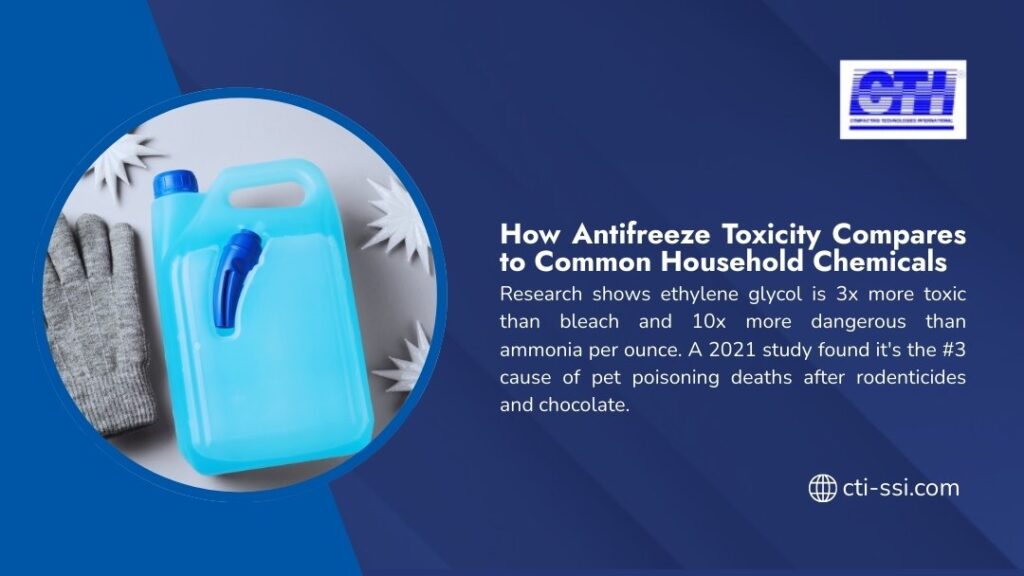
Antifreeze tastes sweet due to ethylene glycol. Animals actively seek and drink spilled coolant. As little as one teaspoon kills a cat, and two tablespoons prove fatal for dogs.
Symptoms appear within hours:
- First 12 hours: Intoxication, vomiting, excessive thirst
- 12-24 hours: Apparent recovery (false improvement)
- 24-72 hours: Kidney failure, seizures, death
The Humane Society reports that antifreeze poisoning kills thousands of pets annually. Most deaths result from improper disposal rather than vehicle leaks.
Soil and Water Contamination
Antifreeze persists in the environment for extended periods. Ethylene glycol breaks down slowly in soil, taking months to years for complete degradation. During this time, it continuously leaches into groundwater.
Contamination spreads beyond the initial disposal point. Antifreeze follows groundwater flow paths and can affect wells and water sources miles from the original violation site.
Understanding various hazardous waste examples helps recognize why antifreeze requires the same careful handling as other toxic materials.
Regulatory Actions
Environmental agencies investigate antifreeze disposal violations aggressively. Common enforcement actions include:
- Site inspection and contamination assessment
- Mandatory cleanup and remediation orders
- Civil penalties up to $50,000 per violation
- Criminal prosecution for willful violations
- Property liens for unpaid cleanup costs
Documentation requirements apply even after cleanup. Property disclosure laws in most states require sellers to reveal environmental violations that occurred on their land.
Is Antifreeze Recyclable?
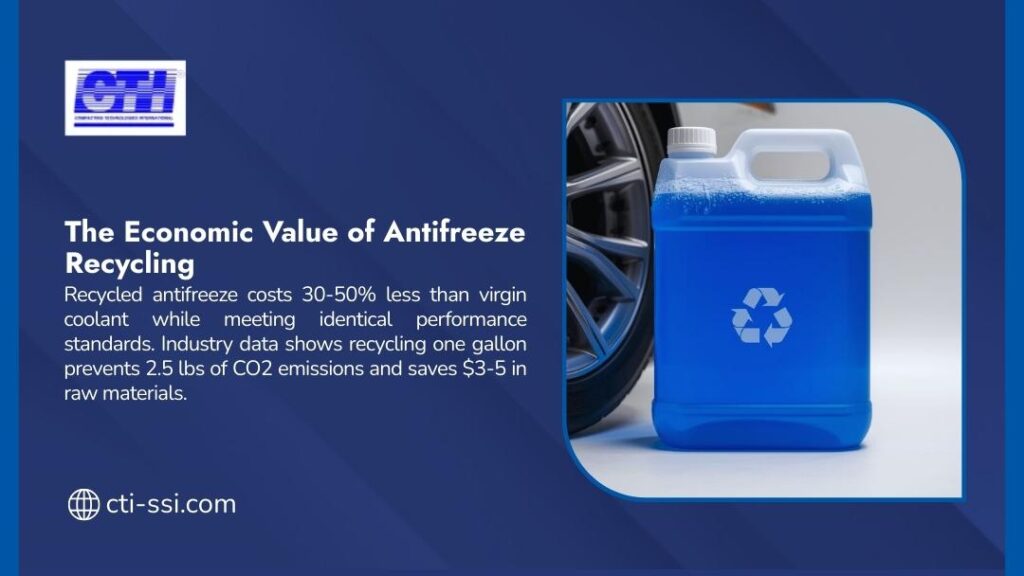
Yes, antifreeze represents one of the most recyclable automotive fluids. Re-refining technology recovers up to 95% of ethylene glycol or propylene glycol from used coolant.
The Recycling Process:
Commercial recycling operations use multi-stage treatment:
| Step | Process Name | What Happens |
| Step 1 | Initial Filtration | Removes large particles, rust, and solid debris using mechanical filtration systems. |
| Step 2 | Vacuum Distillation | Contaminated antifreeze is heated under vacuum. Reduced pressure allows glycol to evaporate at lower temperatures, separating it from water, oils, and heavy metals. |
| Step 3 | Chemical Treatment | Chemicals are added to neutralize acids and precipitate remaining contaminants, producing clean glycol base stock. |
| Step 4 | Re-Fortification | Recovered glycol is blended with new additives, corrosion inhibitors, and anti-foam agents to create finished antifreeze meeting ASTM D3306 standards. |
Environmental Benefits of Recycling:
Antifreeze recycling conserves petroleum resources since ethylene glycol derives from petroleum feedstocks. Each gallon of recycled antifreeze saves approximately 0.7 gallons of crude oil consumption.
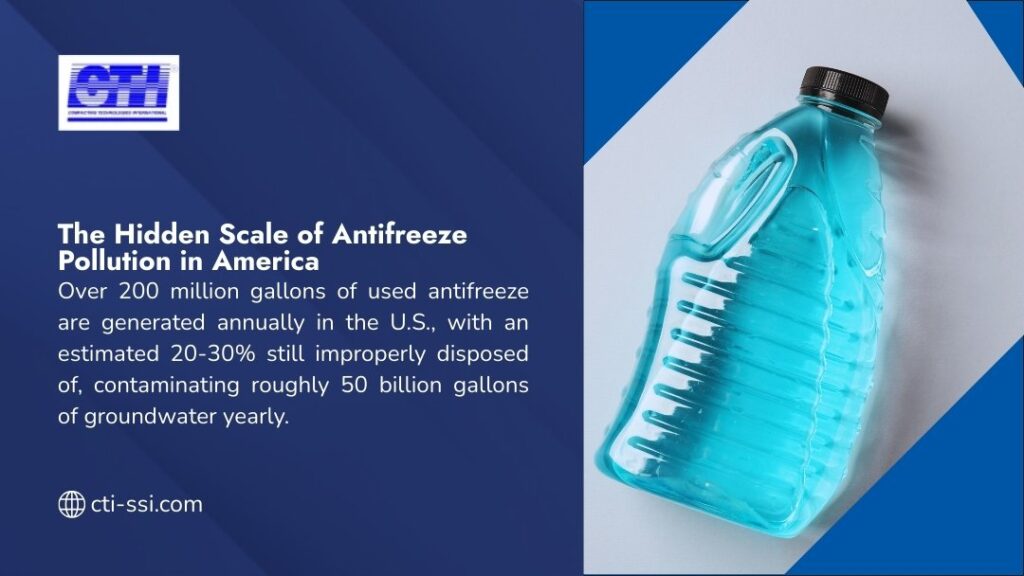
Recycling reduces hazardous waste disposal volume. The EPA estimates that over 200 million gallons of used antifreeze require disposal annually in the United States. Recycling programs divert substantial amounts from landfills and incineration facilities.
For industrial facilities that handle large volumes, liquid waste disposal systems that incorporate recycling reduce both environmental impact and disposal costs.
How to Dispose of Antifreeze from Industrial Operations
Commercial facilities, fleet operations, and industrial sites generate antifreeze waste at scales that exceed household collection program capabilities. These operations need specialized disposal strategies.
- Volume Reduction Systems
Facilities that produce substantial waste volumes benefit from compaction and volume reduction technology. Advanced systems handle contaminated coolant and related waste materials through:
| Feature | Description |
| Liquid Separation Capability | Extracts and separates fluids prior to final disposal, reducing waste volume and improving handling safety. |
| NEMA 7 Explosion-Proof Components | Designed for safe operation in environments with flammable vapor exposure. |
| HEPA Filtration System | Traps airborne particles with 99.97% efficiency at 0.3 microns, protecting air quality and operators. |
| Stainless Steel Construction | Resists corrosion caused by coolant and antifreeze chemicals, ensuring long-term durability. |
CTI Safety Storage manufactures industrial waste compaction equipment designed for hazardous material applications.
Their systems feature liquid removal capabilities and advanced filtration that handle automotive waste streams safely while reducing disposal volumes.
- Compliance Documentation
Industrial antifreeze disposal requires comprehensive record-keeping:
- EPA generator identification numbers
- Waste characterization documentation
- Hazardous waste manifests for each shipment
- Disposal facility receipts and certificates
- Training records for staff who handle waste
- Annual reports (for large quantity generators)
Maintain these records for at least three years. EPA audits and inspections can occur at any time, and missing documentation results in violations regardless of actual disposal practices.
Frequently Asked Questions (FAQ) About How to Dispose of Antifreeze
Is all antifreeze considered hazardous waste?
Fresh, unused antifreeze is not hazardous waste. However, once antifreeze circulates through a vehicle’s cooling system, it becomes contaminated with heavy metals and qualifies as hazardous in most cases — which affects how to dispose of antifreeze legally and safely.
How much antifreeze can I dispose of at once?
Household hazardous waste programs typically accept 5-15 gallons per visit from residents. Commercial operations have no volume limits when they use licensed hazardous waste haulers, so always check with your specific collection facility for their current policies.
Can I mix antifreeze with other automotive fluids?
No. Keep antifreeze separate from motor oil, transmission fluid, and brake fluid. Mixed automotive waste requires different disposal processes and may cost more to handle. Separation maintains recycling potential and simplifies proper disposal.
Do auto repair shops have to accept used antifreeze?
No legal requirement exists for repair shops to accept antifreeze from non-customers. Some shops accept used antifreeze as a courtesy or for small fees, but policies vary by business. Always call ahead to confirm acceptance before transport.
What should I do if I accidentally spill antifreeze?
Contain spills immediately with absorbent materials like kitty litter or commercial spill absorbents. Never hose down antifreeze spills, as this spreads contamination. Collect saturated absorbent material in sealed containers and dispose of it as hazardous waste along with the original antifreeze.