Article Summary:
- Mattress disposal requires proper classification based on material composition and contamination
- Industrial facilities face specific regulations for bulk mattress waste management
- Volume reduction through compaction cuts disposal costs by 50-70%
- Commercial mattress waste differs significantly from residential disposal options
- Proper handling protects facilities from liability and environmental violations
This guide explains how to dispose of a mattress from industrial operations, including hotels, medical facilities, dormitories, and manufacturing sites. It covers classification requirements, disposal methods, cost considerations, and compliance protocols for commercial mattress waste streams.
When Mattresses Become Industrial Waste
Commercial facilities generate mattress waste at volumes that residential pickup programs can’t handle. Hotels replace bedding during renovations. Medical facilities discard contaminated mattresses regularly. Dormitories cycle through hundreds of units annually.
These volumes create disposal challenges that require industrial waste disposal solutions rather than consumer-focused services.
| Facility Type | Annual Mattress Waste | Primary Challenge | Disposal Requirements |
| Hotels (200+ rooms) | 50-150 units | Volume, timing | Commercial hauler required |
| Hospitals | 100-300 units | Contamination risk | Medical waste protocols possible |
| Universities | 500-2,000 units | Seasonal surge | Bulk scheduling needed |
| Manufacturing | Varies | Space constraints | Compaction beneficial |
| Correctional facilities | 200-500 units | Security concerns | Specialized handling |
The EPA estimates that Americans dispose of 15-20 million mattresses annually, with approximately 80-85% ending up in landfills. Commercial facilities contribute a significant portion of this waste stream.
Mattress Classification for Industrial Disposal
Before you learn how to dispose of a mattress from your facility, you need to understand material classification.
Most mattresses qualify as non hazardous waste when uncontaminated. They contain foam, fabric, metal springs, and wood frames—all standard solid waste materials.
However, contamination changes classification requirements completely.
| Contamination Type | Classification | Disposal Pathway | Regulatory Concern |
| Bloodborne pathogens | Medical waste (potential) | Licensed medical waste facility | OSHA, state health dept |
| Chemical spills | Hazardous waste | Depends on chemical type | EPA RCRA |
| Mold/biological | Solid waste (typically) | Standard landfill | Local health codes |
| Bed bugs | Solid waste | Requires wrapping/marking | Pest control regulations |
| No contamination | Solid waste | Multiple options available | Minimal |
Medical facilities must evaluate mattresses case-by-case. A mattress from an isolation room with infectious disease requires different handling than one from general patient care.
Chemical contamination from industrial accidents converts mattresses to hazardous waste that needs specialized disposal.
Commercial Disposal Options
Industrial facilities have several pathways for mattress disposal, each with distinct cost and logistics requirements.
| Disposal Method | Cost Per Unit | Processing Time | Best For |
| Commercial hauler | $20–$75 | Scheduled pickup | Regular generation |
| Mattress recycling facility | $15–$40 | Drop-off or pickup | Sustainability goals |
| Landfill direct haul | $10–$30 | Same day | Cost-sensitive disposal |
| Donation programs | $0–$25 (transport only) | Varies | Good condition units |
| Compaction + disposal | $8–$20 (after equipment) | On-site processing | Large generators |
Commercial Hauler Services
Most facilities contract with commercial waste haulers for mattress pickup. These services schedule regular collections or respond to bulk disposal needs.
Haulers charge by unit count and accessibility. Ground-floor loading costs less than upper-floor collection that requires freight elevators and additional labor.
Mattress Recycling Programs
Recycling facilities disassemble mattresses to recover steel springs, foam, and fabric. According to the Mattress Recycling Council, properly processed mattresses can achieve 75-90% material recovery rates.
California, Connecticut, and Rhode Island operate mandatory mattress recycling programs funded by point-of-sale fees. Facilities in these states must use approved recyclers rather than standard landfills.
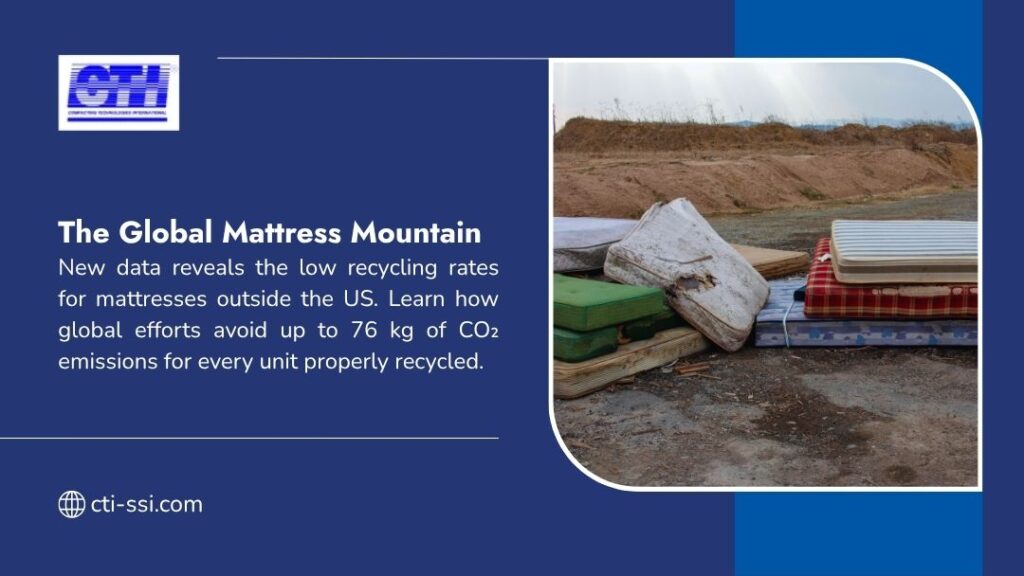
Volume Reduction Through Compaction
Large-volume generators benefit from on-site compaction before disposal. Mattresses contain significant air space that transportation charges are based on volume rather than weight.
From an engineering perspective, mattress compaction can reduce disposal volume by 70-80% compared to loose loading. Fewer truck trips mean lower hauling costs and reduced environmental impact.
How to Get Rid of Old Mattresses at Scale
Industrial mattress disposal requires systematic processes rather than ad-hoc removal.
Preparation and Staging
Designate a specific staging area for mattress waste. This prevents clutter in hallways, storage rooms, or loading docks while awaiting pickup.
Wrap contaminated or bed bug-infested mattresses in plastic sheeting before moving them to staging areas. This prevents spread of pests or contaminants during transport.
Tag each mattress with disposal date and origin location for tracking purposes. Large facilities need records showing when and where mattresses enter the waste stream.
Transportation and Loading
Most commercial haulers provide roll-off containers or enclosed trucks for mattress collection. Loading methods vary by facility layout and mattress condition.
Ground-floor access simplifies loading. Upper-floor facilities need freight elevators or exterior windows for efficient removal.
Some facilities invest in drum crushers and similar compaction equipment adapted for bulky waste streams.
Documentation Requirements
Maintain disposal records showing:
- Unit count and type
- Disposal date and method
- Hauler information and manifest numbers
- Cost per disposal event
These records prove proper disposal if regulators question waste management practices.
Mattress Disposal Regulations
While mattresses typically don’t face the strict regulations that apply to hazardous waste examples, some requirements still apply to commercial disposal.
| Regulation Type | Applies To | Key Requirements | Enforcement Agency |
| State recycling mandates | CA, CT, RI facilities | Must use approved recyclers | State environmental agency |
| Medical waste rules | Healthcare facilities | Contaminated units follow medical waste protocols | State health department |
| Local solid waste codes | All commercial generators | Proper containerization, pickup frequency | City/county authorities |
| Bed bug disclosure | Multi-unit housing | Must mark infested mattresses | Local health department |
| Fire safety codes | Storage areas | Limits on mattress accumulation | Fire marshal |
State-Specific Programs
California’s mattress recycling law requires manufacturers to fund collection and recycling infrastructure. Facilities pay a $10.50 fee per unit that covers program operations.
Connecticut and Rhode Island operate similar programs with fees ranging from $9-$16 per mattress.
States without mandatory programs allow standard landfill disposal, though some municipalities restrict mattress waste at local transfer stations.
Healthcare Facility Requirements
OSHA’s Bloodborne Pathogens Standard (29 CFR 1910.1030) applies when mattresses have blood or body fluid contamination. These units might require medical waste disposal depending on contamination severity.
Most healthcare mattresses use fluid-resistant covers that protect the inner materials. When covers remain intact, the mattress typically qualifies as regular solid waste after surface disinfection.
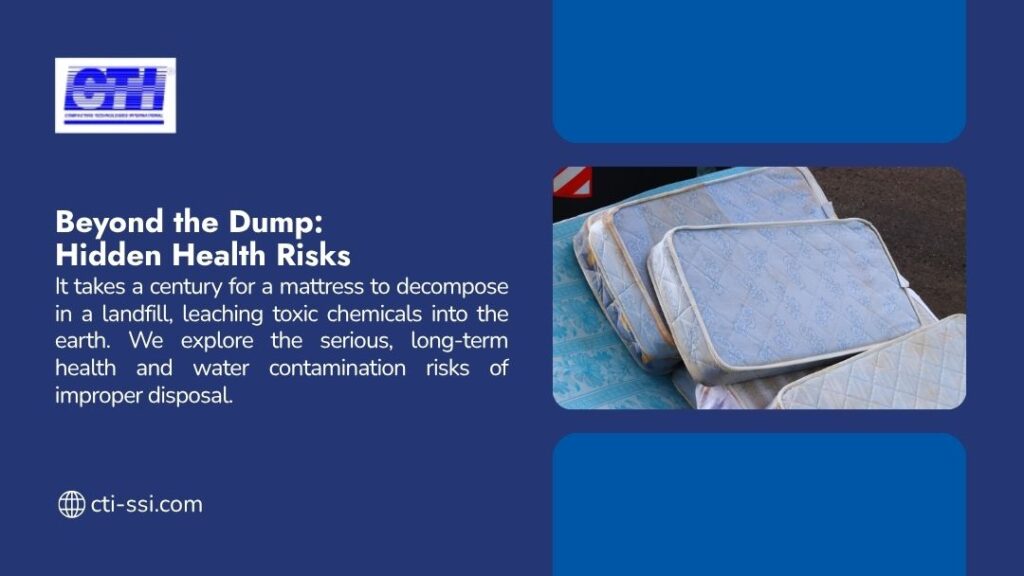
Cost Reduction Strategies
Mattress disposal expenses accumulate quickly for high-volume generators. Several approaches cut costs without compromising compliance.
| Strategy | Cost Savings | Implementation Complexity |
| Scheduled bulk pickups | 20-35% vs. individual pickup | Low – coordinate timing |
| On-site compaction | 40-60% long-term | High – equipment investment |
| Direct recycler contracts | 15-30% vs. hauler markup | Medium – requires vetting |
| Donation of usable units | Variable | Medium – quality standards |
| Preventive maintenance | 10-20% through extended life | Low – training and supplies |
Volume Consolidation
Combine mattress disposal with other bulky waste pickups when possible. Haulers charge less for full truckloads than partial loads.
Schedule pickups to coincide with renovation projects or seasonal turnover periods. This concentrates disposal activity and improves negotiated rates.
Extended Service Life
Mattress protectors and regular cleaning extend useful life, reducing replacement frequency. Hotels that implement protective programs report 15-30% longer mattress lifespans.
This prevention reduces both procurement and disposal costs over time.
Recycling Revenue
Some mattress recyclers pay facilities for high-quality units or large volumes. Payments range from $2-$8 per mattress depending on condition and quantity.
This typically applies only to uncontaminated mattresses in markets with strong recycling infrastructure.
Safety and Handling Protocols
Mattress handling creates injury risks and contamination concerns that require proper protocols.
| Hazard Type | Risk Level | Control Measures |
| Manual handling injury | High | Two-person lift minimum, mechanical aids |
| Bed bug exposure | Medium | Wrap before transport, PPE for handlers |
| Biological contamination | Medium to High | Gloves, assess for medical waste criteria |
| Sharp objects (springs) | Medium | Inspect before handling, proper grip points |
| Fire hazard in storage | Low to Medium | Limit accumulation, separate from ignition sources |
Personal Protective Equipment
Workers who handle mattress waste need:
- Cut-resistant gloves to protect against exposed springs
- Long sleeves and pants to prevent bed bug contact
- Safety glasses when compacting or cutting mattresses
- N95 respirators if mold or biological contamination suspected
Lifting and Transport
Mattresses create awkward lifting positions that contribute to back injuries. OSHA guidelines recommend two-person teams for any mattress movement.
Mechanical aids like furniture dollies or carts reduce injury risk. Some facilities use mattress bags with handles that improve grip and control.
Donation and Reuse Considerations
Some commercial mattresses remain suitable for donation rather than disposal. This option reduces waste while providing community benefit.
Donation Requirements
Most charities that accept mattress donations require:
- No stains, tears, or odors
- Functional support (no sagging or broken springs)
- Free from bed bugs or pest evidence
- Compliance with flammability standards
Medical facility mattresses rarely qualify for donation due to contamination concerns and liability risk.
Hotels often donate mattresses during room renovations when units haven’t reached end-of-life. This practice requires coordination with local nonprofits that accept furniture donations.
- Tax Benefits
Facilities can claim charitable deductions for donated mattresses at fair market value. This provides some cost recovery compared to disposal fees.
Documentation requirements include:
- Receipt from receiving organization
- Count and condition description
- Fair market value assessment
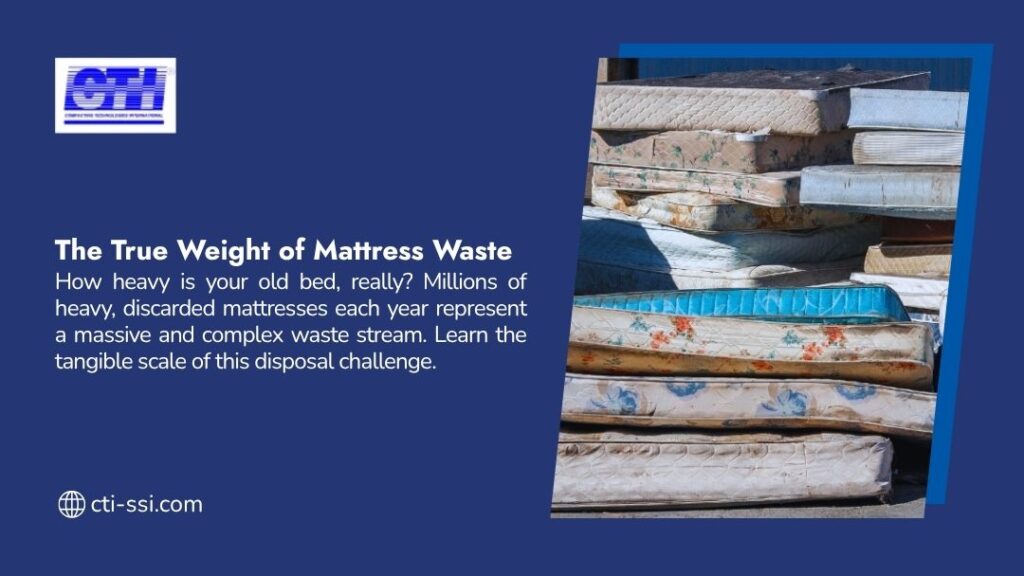
Volume Reduction Technology
Facilities that handle significant mattress waste benefit from dedicated compaction systems.
Standard commercial compactors struggle with mattresses due to their size and spring content. Specialized equipment handles these characteristics more effectively.
| Equipment Feature | Purpose | Benefit |
| High compaction force (40,000+ lbs) | Compress spring and foam layers | Achieves 70-80% volume reduction |
| Large feed opening | Accommodates full-size mattresses | Reduces manual cutting labor |
| Slow compression cycle | Allows gradual spring compression | Prevents equipment damage |
| Enclosed chamber | Contains foam particles and debris | Meets cleanliness standards |
CTI Safety Storage manufactures industrial waste compactors capable of processing bulky waste streams that include mattresses. Their systems apply gradual pressure that compresses foam and metal components without damaging hydraulic systems.
Frequently Asked Questions About Industrial Mattress Disposal
Can hotels donate used mattresses to charity?
Many hotels partner with local nonprofits during renovation projects. Units that don’t meet donation criteria require standard disposal methods.
Do we need special permits for mattress disposal?
Most facilities don’t need disposal-specific permits. However, you must follow local solid waste regulations regarding accumulation limits and pickup frequency. States with mattress recycling mandates require use of approved facilities.
How do we dispose of mattresses with bed bugs?
Wrap infested mattresses completely in plastic before removal from the room. Mark the exterior so handlers can take appropriate precautions. Most jurisdictions allow landfill disposal of bed bug-infested mattresses when properly wrapped.
What happens to recycled mattresses?
Recycling facilities disassemble mattresses manually or mechanically. Steel springs go to scrap metal recyclers. Foam becomes carpet padding or industrial insulation. Fabric may convert to fiber for various applications. Wood frames can become mulch or biomass fuel.
Are there regulations against storing too many mattresses on-site?
Fire codes often limit mattress accumulation in buildings due to fire risk. Check local fire marshal requirements. Most codes allow temporary staging for disposal but prohibit long-term storage of large quantities.
Final Considerations
Learning how to dispose of a mattress at commercial scale requires planning beyond what residential programs offer. Facilities must evaluate volume, contamination risk, cost constraints, and regulatory requirements specific to their operations.
The key factors include proper classification based on contamination status, selection of appropriate disposal methods for your volume and location, documentation that proves compliant handling, and cost management through consolidation or volume reduction.
High-volume generators should evaluate compaction systems that reduce long-term disposal costs. The equipment investment typically provides return within 24-36 months through reduced hauling frequency and lower per-unit disposal fees.